
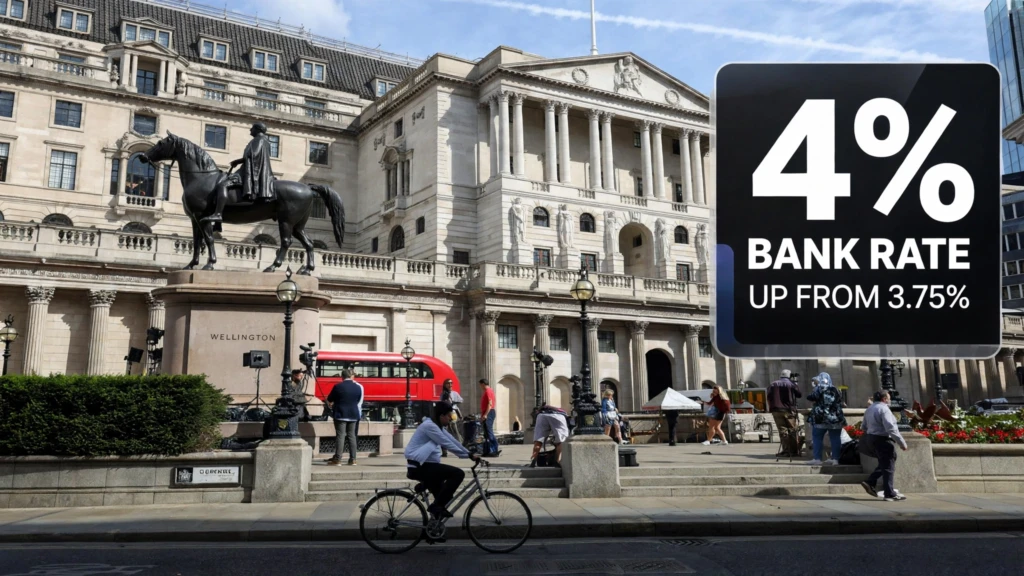
The Bank of England has raised interest rates to 4% in its first increase in more than three years. The Bank Rate rose from 3.75% to 4% on Thursday, 5 November, ending a run of six meetings with no change.
How the Bank voted
The Bank’s Monetary Policy Committee (MPC) voted 8-1 to raise the rate by 0.25 percentage points. Eight members backed the rise to 4%. One member, Catherine Mann, wanted a bigger increase of half a point, to 4.25%.
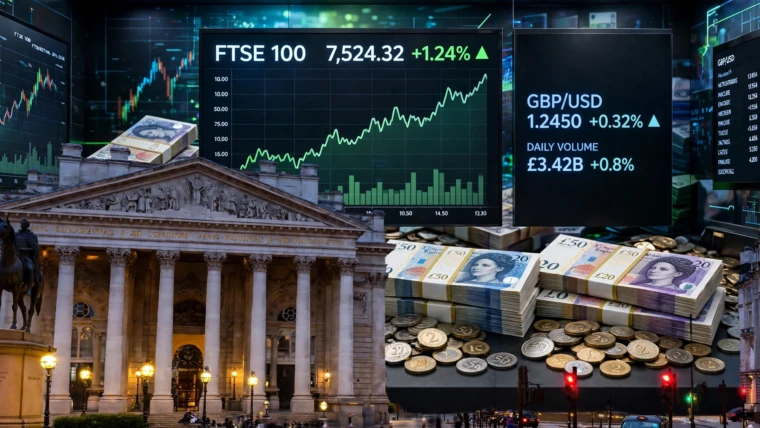
No member voted to keep rates on hold. Markets had expected at least one vote to hold, so the lack of one was a firm signal. The pound rose against the US dollar after the decision, and two-year government bond yields rose by 4 basis points.
Read more: Bank of England Expected to Raise Interest Rates to 4% on Thursday in First Hike Since 2023
Why rates went up
Inflation in the UK rose to 3.5% in September, up from 3.1% in August. That is still well above the Bank’s 2% target. Energy prices alone added around one percentage point to inflation.
The Bank said the pressure on prices in the pipeline was now strong enough to warrant a rise. It added that the move was precautionary, not a sign that the economy is overheating.
The Bank now expects inflation to climb towards 5% by the middle of 2027 and to return to its 2% target only in late 2028. It raised its growth forecasts to 1.6% for this year and 1.3% for next year.
More rises may follow
The Bank warned that at least one more increase was likely if the US-Iran conflict continues, as higher energy prices feed through. Governor Andrew Bailey said the Bank must keep a grip on inflation.
The decision is the first rise since August 2023. The last change before today was a cut in December 2025. The next rate decision is due on 17 December.
Read more of our Business coverage.


Comments (0)
Be respectful — comments are moderated.