

The year 2026 is on track to become one of the four hottest years ever recorded, the United Nations weather agency has warned, as a powerful El Niño adds extra heat to an already warming planet.
The World Meteorological Organization (WMO) published its State of the Climate Update 2026 on 9 November, the opening day of the COP31 climate talks in Antalya, Türkiye. Its figures show that the average global temperature between January and September 2026 was about 1.47°C above the pre-industrial average of 1850–1900.
That puts 2026 close behind 2024, the hottest year on record at 1.55°C above pre-industrial levels. It is roughly level with 2023, at 1.46°C, and ahead of 2025, at 1.43°C. The four warmest years in the record are now 2023, 2024, 2025 and 2026. Every one of the past 12 years, from 2015 to 2026, ranks among the 12 warmest years since records began.
El Niño could push temperatures even higher
Temperatures could still rise before the year ends. A strong El Niño has been building in the tropical Pacific since August and is expected to reach its peak in December. The WMO says it could become one of the strongest El Niño events ever recorded.
El Niño is a natural warming of sea surface temperatures in the tropical Pacific. It usually adds between 0.1°C and 0.2°C to the global average temperature. Sea surface temperatures in the El Niño monitoring region were recently 2.6°C above average, far past the 1.5°C level that marks a strong event.
The WMO expects the current El Niño to keep shaping global weather until at least February 2027. That means its full effect on temperatures may show up next year, and 2027 could challenge the heat record too.
WMO Secretary-General Celeste Saulo said the state of the global climate in 2026 “gives new meaning to the phrase off the charts”. She warned that rising temperatures combined with a powerful El Niño could worsen climate-related disruption around the world.
Second year above 1.5°C is now almost certain
The European Union’s Copernicus Climate Change Service says it is “virtually certain” that 2026 will be the second calendar year to pass 1.5°C above pre-industrial levels, after 2024. Copernicus also reported that October 2026 was the warmest October on record globally, at 1.75°C above the pre-industrial average.
Scientists stress that a single year above 1.5°C does not mean the Paris Agreement limit has been broken. That limit refers to the average temperature over about 20 years. But years at or near 1.5°C are now becoming routine, and the world is already on course to overshoot the threshold in the long term unless emissions fall fast.
The WMO report also found that greenhouse gas levels hit a new record in 2025. Carbon dioxide in the air rose to about 426.8 parts per million, up from around 278 parts per million in 1750. Ocean heat also set a new record, with the heat stored in the top 2,000 metres of the sea rising sharply in 2025 and continuing to climb in 2026.
Extreme weather is already hitting hard
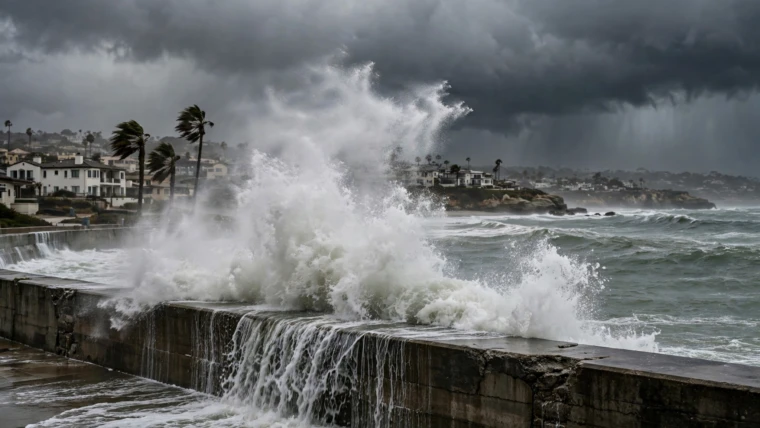
The heat is not just a number on a chart. This year has already brought deadly heatwaves across Western Europe and a glacier collapse in Nepal, where the floods that followed killed more than 1,450 people and left thousands missing. The WMO says a very strong El Niño could raise the risk of more heat, drought and heavy rain well into 2027.
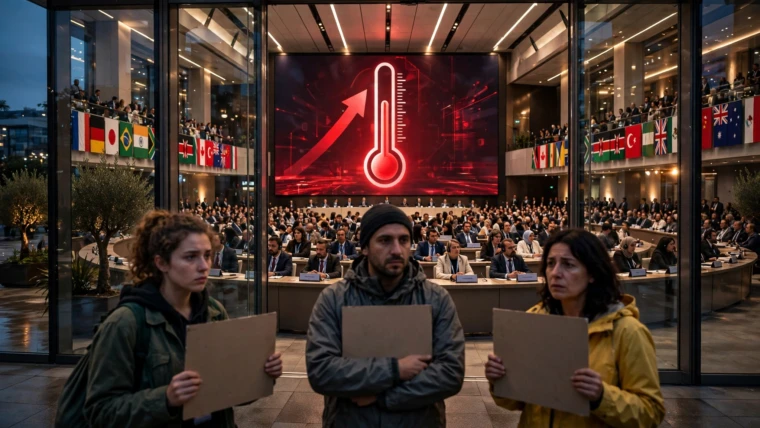
The findings were published as nearly 200 countries meet at COP31 in Antalya to debate how to speed up climate action. The talks run until 20 November, and the science is now at the centre of the argument over fossil fuels, climate finance and the 1.5°C goal.
Read our earlier report from the summit: COP31: Guterres Warns ‘Make or Bake’ as Finance Falls 70%.
For now, the message from the world’s scientists is clear. The planet keeps getting hotter, the records keep falling, and the window to slow the warming is getting smaller every year.
Sources: World Meteorological Organization; Le Monde; The Business Times; Rappler.


Comments (2)
Be respectful — comments are moderated.[…] The pattern fits a year that is already on course to be one of the hottest on record. Read more in 2026 Set to Be Among Four Hottest Years, UN Warns. […]
[…] for five straight years. The warning lands as the world is already living through the effects. 2026 Set to Be Among Four Hottest Years, UN Warns, according to the World Meteorological Organization, with the past 12 years the hottest on […]