

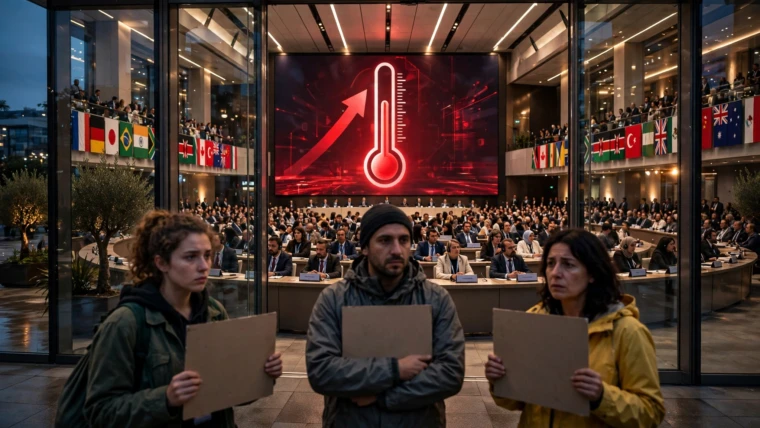
The first week of the COP31 climate summit in Antalya, Turkey, ended on Friday with a stark warning from the United Nations chief and deep splits between countries over fossil fuels and money. UN Secretary-General António Guterres told around 80 world leaders that it was “make or bake time” for the planet, and he called for an “immediate and drastic reduction” in greenhouse gas emissions.
The summit, which runs from 9 to 20 November, is the 31st annual UN climate conference. For the first time, two countries are steering it together: Turkey is hosting the talks in Antalya, while Australia is leading the formal negotiations. More than 92,000 people have registered to attend, which could make it the largest COP in history.
Make or bake time
Guterres addressed the World Leaders’ Summit on Wednesday and Thursday, when heads of state and government set out their positions in two days of speeches. He warned that global carbon emissions reached a record high in 2025, and that the past four years were the hottest on record.
A UN report published last month found that the world is on course to break through the 1.5 degrees Celsius warming limit agreed under the 2015 Paris Agreement. Under current policies, temperatures are now expected to rise by around 2.8 degrees Celsius, far above the level scientists say is needed to avoid the worst effects of climate change.
Small island states, which face rising sea levels, pleaded for urgent cuts to emissions. The prime minister of the Solomon Islands, Matthew Wale, and the president of the Marshall Islands, Hilda Heine, both told the conference that their countries are already living with the damage caused by warming.
Fossil fuels divide the talks
The biggest argument of the first week was over fossil fuels. Big producers and consumers of oil, gas and coal are resisting any deal that would set firm new targets or call for a shift away from fossil fuels, observers said as the week drew to a close.
The COP31 presidency has tried to move the talks forward with a plan to expand electrification. Turkey wants electricity to supply 35 per cent of the world’s energy by 2035, up from about 23 per cent today. The idea is that cleaner power for cars, heating and industry would cut emissions without a direct fight over oil and gas. British Prime Minister Andy Burnham backed the proposal, known as the 35-by-35 pledge.
But a move by the presidency to agree an overarching “cover decision” faced pushback from Russia and other countries. By the end of the week, draft texts had emerged from most negotiating tracks, yet the hardest issues remained stalled. A draft cover decision is now due early next week.
The United States, the world’s biggest oil consumer, has skipped the talks for a second year in a row. Washington formally withdrew from the Paris Agreement at the start of this year and sent no official delegation to Antalya.
Climate finance falls sharply
Money was the other big fault line. Poor countries that suffer most from floods, droughts and storms asked for far more help, but rich countries have offered little new cash. Analysis by Carbon Brief found that public climate finance pledged by developed nations in the coming years is around 70 per cent lower than it was in 2025.
Two years ago, rich countries agreed to triple climate funding for poorer nations to 300 billion dollars a year by 2035. Yet an analysis published by Brazil, the host of last year’s COP30, found that current trends would leave funding 840 billion dollars short of the 1.3 trillion dollar goal.
Negotiators also made slow progress on a new climate finance work programme, one of the most contested items on the agenda. Talks on that issue remained stalled as the first week ended, adding to the pressure on the second week.
Climate finance is not only a COP31 issue. African nations have been building their own carbon markets to raise money for green projects, as covered in Africa Carbon Markets Summit Opens in Kigali.
What happens in week two
Australia’s negotiating team, led by Chris Bowen, spent the first days gathering views from all countries on what a final deal should contain. Bowen will publish a high-level summary of those views and take written inputs from countries until Saturday night, before drafting a text early next week.
The COP31 president, Turkey’s environment minister Murat Kurum, has said the summit should be one of implementation, turning past promises into real projects. The presidency’s Action Agenda also covers zero waste, methane cuts and climate-resilient cities.
With one week left, the test for Antalya is whether countries can agree on anything that speeds up real cuts in emissions. Guterres has made the stakes clear. As he told leaders this week, the world must choose between acting now or living with the heat.
Sources: Carbon Brief, Dawn, Al Jazeera, Council on Foreign Relations

Comments (2)
Be respectful — comments are moderated.[…] Read our earlier report from the summit: COP31: Guterres Warns ‘Make or Bake’ as Finance Falls 70%. […]
[…] extra financial help. The fight over money has run through the whole summit: our earlier report, COP31: Guterres Warns ‘Make or Bake’ as Finance Falls 70%, covered the UN chief’s warning that climate finance is falling far short of what is […]