
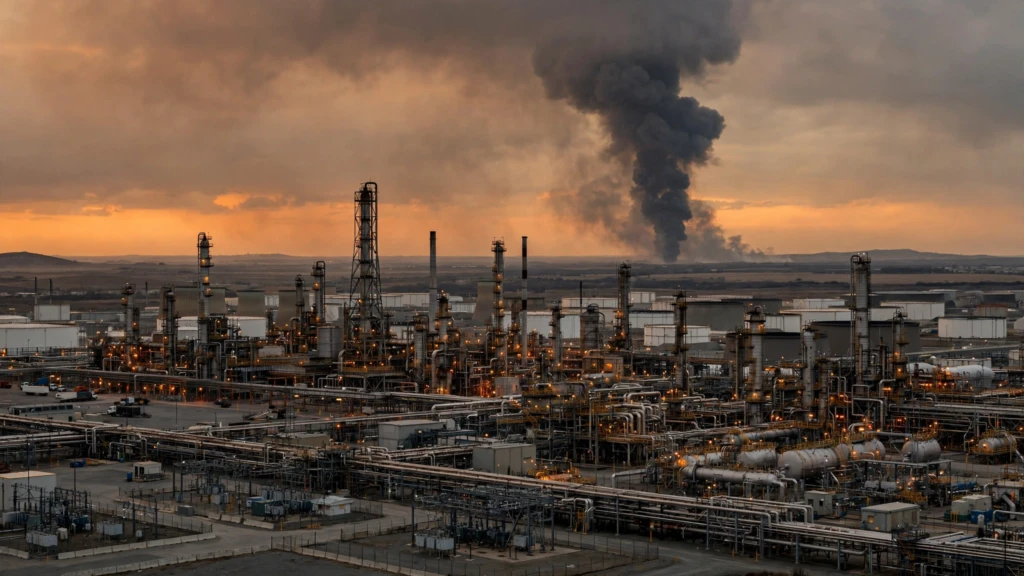
Donald Trump has called Ukraine’s renewed strikes on Russian oil refineries a “disgrace”. He made the remark in a Newsmax interview aired on October 16. Trump said the attacks keep global energy prices high and hurt ordinary people.
What Trump Said
Trump told the interviewer that Kyiv was wrong to restart the strikes. He said hitting refineries pushes up the price of oil around the world. Families are already paying more for fuel and heating, he argued.
The former president has long claimed he could end the war quickly. He said the strikes make a peace deal harder to reach. His words mark some of his strongest criticism of Ukraine’s tactics so far.
The Newsmax Interview
The comments came during a wide-ranging TV interview on the conservative channel. Trump was asked about the war and rising fuel costs. He linked the two issues in a direct and blunt way.
Newsmax is one of Trump’s friendliest media outlets. The interview gave him space to speak at length. His team later shared clips of the exchange on social media.
Ukraine’s Position
Ukraine says the strikes are a fair response to Russian attacks. Russian missiles have hit Ukrainian power plants for years. Kyiv argues that refineries are valid military targets in a war.
Ukrainian officials say the strikes weaken Russia’s war machine. Oil money funds much of Moscow’s military budget. Cutting that income, they say, brings peace closer, not further away.
The Broken Ceasefire
Trump had earlier announced a ceasefire covering energy sites. Both sides were meant to stop hitting power and oil targets. Ukraine has now walked away from that deal, according to Reuters.
Kyiv says Russia broke the truce first with fresh attacks. Moscow denies this and blames Ukraine. The collapse of the deal has raised fears of a harsh winter for civilians.
Energy Prices Feel the Heat
Global oil markets reacted nervously to the news of the strikes. Prices rose as traders priced in supply risks. Russia is one of the world’s biggest oil exporters.
Higher oil prices feed into petrol, heating, and food costs. Poor nations feel the squeeze most of all. Aid groups warn that dearer fuel makes hunger crises worse.
Reactions in Washington
Trump’s allies praised the interview as straight talk. They say he is right to put American families first. High fuel prices hurt his voters, they argue.
Critics called the remarks a gift to Moscow. They say blaming Ukraine helps Putin’s cause. Some lawmakers warned the comments could weaken US support for Kyiv.
What It Means for Peace Efforts
The remarks add doubt to Trump’s promise of a quick peace deal. Kyiv now questions whether he is a fair broker. Trust between the two sides has taken a hit.
Diplomats say the energy front may decide the winter. If strikes continue, both sides face blackouts. That pain could force talks, or it could harden hearts further.
How Markets Are Coping
Oil traders have seen this pattern before. Prices spike on strike news, then settle down. But each round leaves the baseline a little higher than before.
Refiners in Europe are hunting for other suppliers. Some turn to the Middle East for spare barrels. Others draw down their stored reserves to meet demand.
The Road Ahead
Ukraine shows no sign of halting the campaign. Its drones grow more capable each month. Russian air defences struggle to stop them all.
Trump may face pressure to act if prices keep rising. For now, his words are the weapon of choice. The real test will come when winter demand peaks.
For now, the strikes look set to continue through the autumn. Ukraine shows no sign of backing down. Trump, for his part, shows no sign of softening his view. The war’s energy front is heating up just as winter nears.
Comments (0)
Be respectful — comments are moderated.