
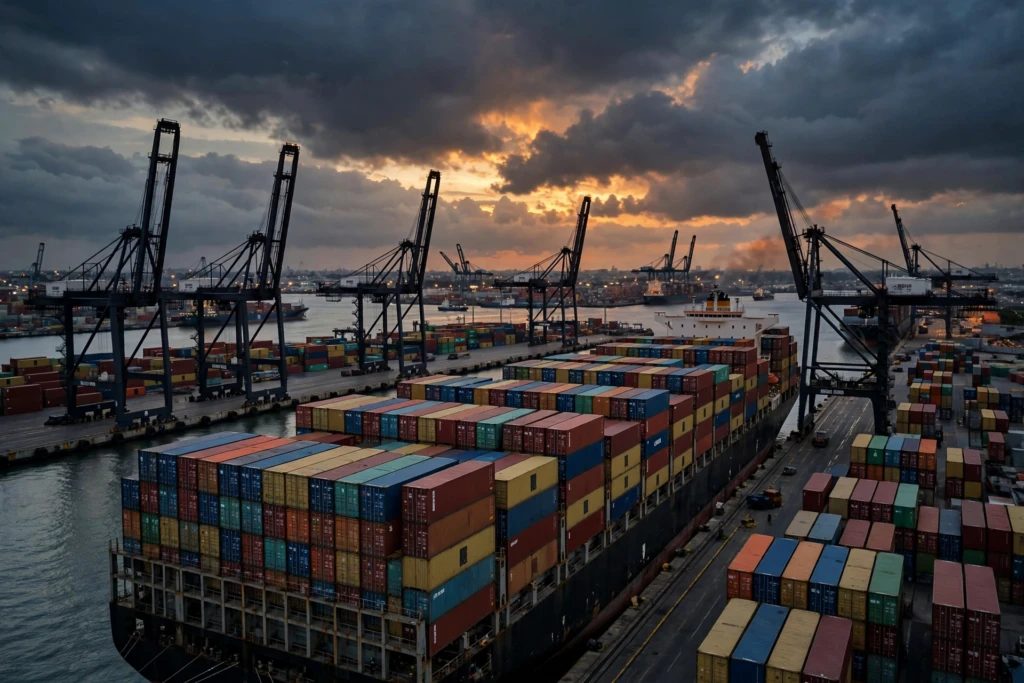
The United States and China have stepped back from the brink of a deeper trade confrontation — for now. A fragile US China trade truce has bought both sides breathing room, even as tariff threats, disputes over industrial overcapacity and a high-stakes round of G20 trade talks keep markets on edge about what comes next.
The pause in hostilities offers negotiators a window to address grievances that have festered for years. But few observers believe the underlying tensions have eased: the truce looks less like a resolution and more like a countdown to the next round of confrontation.
Inside the US China Trade Truce
Details of the truce reflect a mutual recognition that an all-out trade war would inflict severe damage on both economies. American businesses have warned about rising input costs and supply chain disruption, while Chinese exporters — already grappling with weak domestic demand — can ill afford the loss of access to the world’s largest consumer market.
For now, the agreement holds the line: existing tariff levels remain in place, and both sides have committed to continued dialogue. Trade analysts describe it as a tactical pause rather than a strategic breakthrough — a chance to negotiate without the pressure of imminent escalation.
Trump’s Trade Chief to Host G20 Ministers
Attention now turns to the upcoming gathering of G20 trade ministers, where the top US trade official is set to play host. The meeting will bring together the world’s major trading powers at a delicate moment, with the US-China relationship casting a long shadow over the agenda.
American officials are expected to press their case on what they describe as unfair trade practices, while seeking to rally allies around a common approach to Chinese industrial policy. How receptive other G20 members prove — many of whom are wary of being drawn into a binary US-China contest — will be a key test of Washington’s trade diplomacy.
Tariff Threats Still Hang Over Talks
Despite the truce, the threat of new tariffs continues to loom over the negotiations. The US administration has repeatedly used tariff threats as leverage, and officials have made clear that the pause in escalation is conditional on progress in talks.
Business groups on both sides of the Pacific have urged restraint, warning that renewed tariff rounds would raise prices for consumers, squeeze manufacturers and rattle already fragile supply chains. For many companies, the uncertainty itself is the biggest cost — making long-term investment decisions nearly impossible while the threat of sudden tariff hikes persists.
Excess Capacity at the Heart of the Dispute
At the core of the dispute lies the long-running argument over excess industrial capacity. Washington and its allies contend that Chinese state support has flooded global markets with cheap goods — from steel to electric vehicles to solar panels — undercutting producers elsewhere and hollowing out manufacturing bases.
Beijing rejects the charge, arguing that its industrial success reflects investment and scale rather than unfair subsidy, and points to Western protectionism as the real barrier to free trade. Bridging that gap in perception has defeated years of negotiations, and there is little sign that the current round will fare better without significant concessions.
How Markets Are Reading the Truce
Financial markets have greeted the truce with cautious relief. Equities exposed to global trade have steadied, and the extreme volatility that accompanied the worst moments of tariff brinkmanship has eased. But traders remain wary: the history of US-China trade negotiations is littered with truces that collapsed.
For now, investors are treating the pause as an opportunity rather than a resolution — a window in which to hope for progress while hedging against the very real possibility that tariff threats return. As one analyst put it, the truce bought time; what both sides do with it will determine whether this is the start of a settlement or merely the quiet before the next storm.

Comments (0)
Be respectful — comments are moderated.