
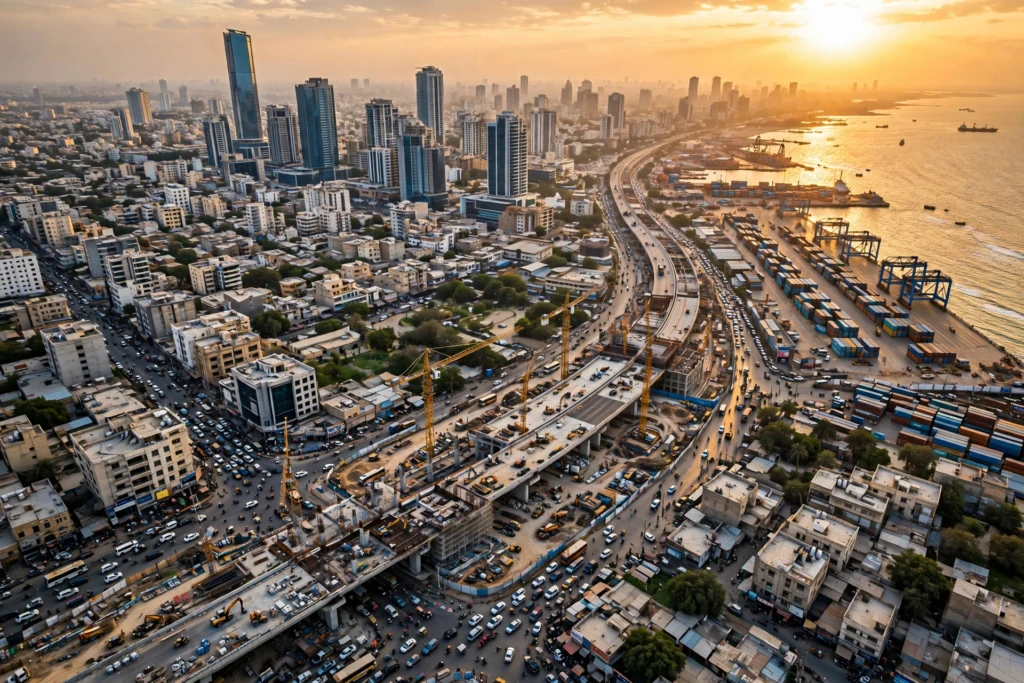
The Karachi Transformation Plan took a major step forward as the Sindh Chief Minister approved a multi-billion-rupee development package for the country’s largest city, greenlighting Rs84.796 billion for 523 development schemes alongside six priority infrastructure projects. The approval, granted at a high-level meeting, signals a renewed push to address Karachi’s long-standing infrastructure and civic challenges.
Karachi, home to more than 20 million people and the engine of Pakistan’s economy, has for years struggled with crumbling roads, chronic water shortages, inadequate drainage and overstretched public transport. Previous development promises have often stalled — but officials insist this plan is different, with funding secured and priority projects clearly identified.
What’s Inside the Rs84.796 Billion Package
The headline figure — Rs84.796 billion spread across 523 schemes — covers a wide range of development work across the city. The schemes span road construction and rehabilitation, water supply and sewerage upgrades, drainage improvements, public parks, street lighting and neighbourhood-level infrastructure that directly affects daily life.
Government officials say the schemes were selected after consultations with district administrations and elected representatives, with an emphasis on projects that can be completed within defined timelines. A monitoring mechanism will track progress scheme by scheme, according to the official briefing.
The sheer number of schemes — 523 — reflects an attempt to spread development across Karachi’s diverse districts rather than concentrating it in a few showcase areas. Whether that breadth translates into visible change will depend on execution.
Six Priority Infrastructure Projects
Alongside the broader package, six priority infrastructure projects have been identified for fast-tracked completion. While full details of each project are expected to be released in phases, priority projects in Karachi typically include major road corridors, flyovers and underpasses, water supply schemes, and mass transit links.
Officials indicated that these six projects will receive dedicated oversight, with the Chief Minister’s office directly monitoring their progress. The fast-track designation means streamlined approvals and priority release of funds — two factors that have historically delayed public projects in the province.
What the Karachi Transformation Plan Means for Residents
For ordinary Karachiites, the plan’s success will be measured in practical terms: shorter commutes, fewer flooded streets during the monsoon, more reliable water supply and safer public spaces. These are the everyday frustrations that have defined life in the city for decades.
Business owners, too, will be watching closely. Karachi generates a major share of national revenue, and its deteriorating infrastructure has long been cited as a drag on economic activity. Improved roads, drainage and utilities could lower the cost of doing business and make the city more attractive to investors.
Transport remains one of the city’s most pressing needs. With a population that continues to grow rapidly, Karachi’s public transport system serves only a fraction of commuters. Any transformation worthy of the name will need to make visible progress on mobility.
The Real Test: Execution and Transparency
Karachi has seen grand development announcements before. What distinguishes successful plans from forgotten ones is rarely the size of the budget — it is the quality of execution, the transparency of spending and the political will to see projects through changes in government.
Civil society groups and urban planners have urged the government to publish project-wise details, timelines and spending data so that citizens can hold authorities accountable. Transparent procurement and third-party audits, they argue, are essential to ensuring the Rs84.796 billion is spent as intended.
The coming months will reveal whether the Karachi Transformation Plan marks a genuine turning point or joins the long list of ambitious announcements. For a city that has waited decades for sustained investment, residents will be watching — and counting.


Comments (0)
Be respectful — comments are moderated.